
ROOF CLEANING METHODS
If you research roof cleaning on the Internet you will encounter claims, counter-claims and outright confusing and conflicting information among the different roof cleaning camps.
We have attempted to provide some clarification here regarding the four main roof cleaning methods most widely available to consumers.
We think that after reading this you will have a greater understanding of roof cleaning methods in general which will assist you in determining the best roof cleaning method for you.


The NON-bleach, green, ECO-FRIENDLY, low pressure Roof Shampoo® roof cleaning method uses a proprietary soap that is specially formulated and buffered to be safe on all asphalt and fiberglass shingles. It will not harm any landscaping around the home, yet is 100% effective at removing roof stains from algae. No damaging high pressure is ever used and absolutely NO scrubbing or brushing. The results are immediate and complete.
FACT: Shingle Manufacturers are using Roof Shampoo® Contractors to provide warranty roof cleanings for their customers.
Authorized Roof Shampoo® contractors use eco-friendly stain removing products and equipment that ensure ALL stains from algae are removed from your roof. A spray-on leave-on product, or a system that claims to use no pressure simply does not use an efficient cleaning system and cannot COMPLETELY remove those ugly roof stains. With the Roof Shampoo® roof cleaning system, there is no waiting, no wondering, and no worrying if the stains will really go away. You will see for yourself that the algae stains are completely gone before your Roof Shampoo® contractor leaves your house.
If our process costs more than just splashing bleach on the roof costs, it is because skilled technicians using the NON-bleach Roof Shampoo® roof cleaning method take the time to actually get on your roof, inspect it, and do the job right using top quality, eco-safe products and state-of-the-art equipment which really clean your roof. Roof Shampoo® contractors are professionals who make sure they clean every square inch of your roof without damaging your shingles or your landscaping.

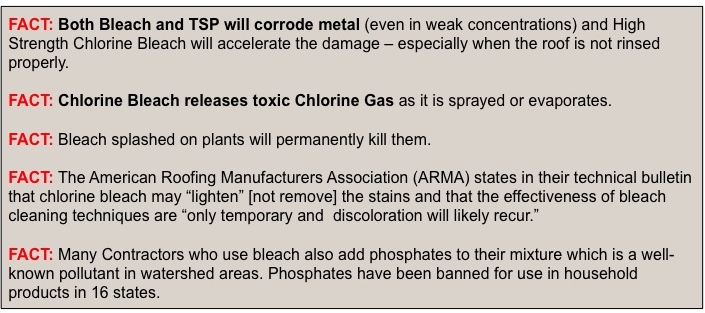
Bleach can corrode roof fixtures such as flashing, underlayments, valleys, and boots.
Consumer Reports® warns NOT to use the chlorine-bleach solution described by the Asphalt Roofing Manufacturers Association due to its damaging effects. Consumer Reports® Senior Editor praised the Roof Shampoo® method after he had his own roof cleaned with Roof Shampoo®.
How will I know if a roof cleaning contractor will be using bleach on my property?
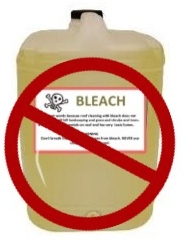
If the Contractor DOES NOT tell you up front that they are NOT using bleach, then they are very likely using bleach. Roof cleaning contractors who use bleach often don't advertise or tell you that they use bleach because they know homeowners don't want bleach used around their homes. Even when asked directly, some may still deny that they use bleach. Be insistent about your need to know. Here are some clues: If they tell you that they use no pressure and that they follow the shingle manufacturers (ARMA) recommendations, then they are using bleach.
Many contractors who use bleach will use the term "Soft Wash". Or, if they tell you they are using sodium hypochlorite -- you should know that sodium hypochlorite is the chemical name for bleach. They may even tell you they use SH, which is short for sodium hypochlorite - bleach. Some even mix fragrance in with the bleach to mask the smell so you won't know it's bleach.
If you're still not sure, ask the following question just this way: "How will you protect my plants while cleaning my roof?" Any answer other than "We don't need to protect your plants because our product does not harm plants," indicates harmful chemicals are being used. If the answer is something like "We wet down your plants before, during, and after our treatment to protect them," you should suspect that bleach is being used. Other indicators that bleach is being used is the use of a runoff recovery system which attempts to suck up all the toxic runoff during the treatment into a containment vessel. Also, if you are told that your plants will be covered during the roof cleaning process or sprayed with a plant protectant, that is a clear sign that your plants are in danger!
Many roof cleaning contractors who use bleach will mix up their own homemade formulas. They mix high-strength chlorine bleach with an array of varied chemicals such as phosphates, dish and laundry detergents, assorted surfactants, and odor-masking scents to hide the smell of the main ingredient - BLEACH! These haphazard chemical concoctions call into question product reliability, stability, safety and consistency across the board.
Chlorine bleach has an intense chemical odor. The toxic fumes can drift a block away, exposing your neighbors as well.
“Chlorine gas can be recognized by its pungent, irritating odor, which is like the odor of bleach. The strong smell may provide adequate warning to people that they are exposed. When chlorine gas comes into contact with moist tissues such as the eyes, throat, and lungs, an acid is produced that can damage these tissues.”

Some roof cleaning contractors will spray a chemical on your roof and tell you to wait for weeks or months to see the results. Products which do not require rinsing, but depend on the rain to wash away roof stains often take repeated applications to achieve even marginal results. Some roof cleaning companies actually use this consumer grade product and charge you professional rates for it. We call them 'Splash and Dash' operators.

Some roof cleaning contractors use high pressure power washing methods to attempt to remove roofs stains. They blast away on your roof blowing the protective granules off as they go. Not only is this method damaging to your shingles, it's also not an effective way to remove roof stains from algae.